

Caleb. Hailey. Sammi. Katie.
Though fictional, these children represent the millions of abused and neglected children whose lives have been impacted by trauma. Their stories have been captured in simulations that bring to life the complexities of child maltreatment cases. Our learners – the students and professionals who participate in problem-based learning simulations – are introduced to them through their disclosures, the hotline reports, the interviews and the interactions that take place among multidisciplinary team members.
The Simulation Studio (SIM Studio) brings together frontline child protection professionals, educators, and administrators for collaborative workshops aimed at the design and development of interactive simulations involving at-risk children and families. These simulations will prepare participants for the complex challenges of working with families experiencing trauma.
Sim Studio Goals
Sim Studio Workshops
The Sim Studio workshop process spans 15 months, during which the Author Team works in collaboration with the SIM Studio team on creating a new simulation. The process takes the author team from the initial planning stages of the simulation, through writing, reviewing, and piloting the simulation, to preparing the simulation for dissemination.
15 Month Timeline
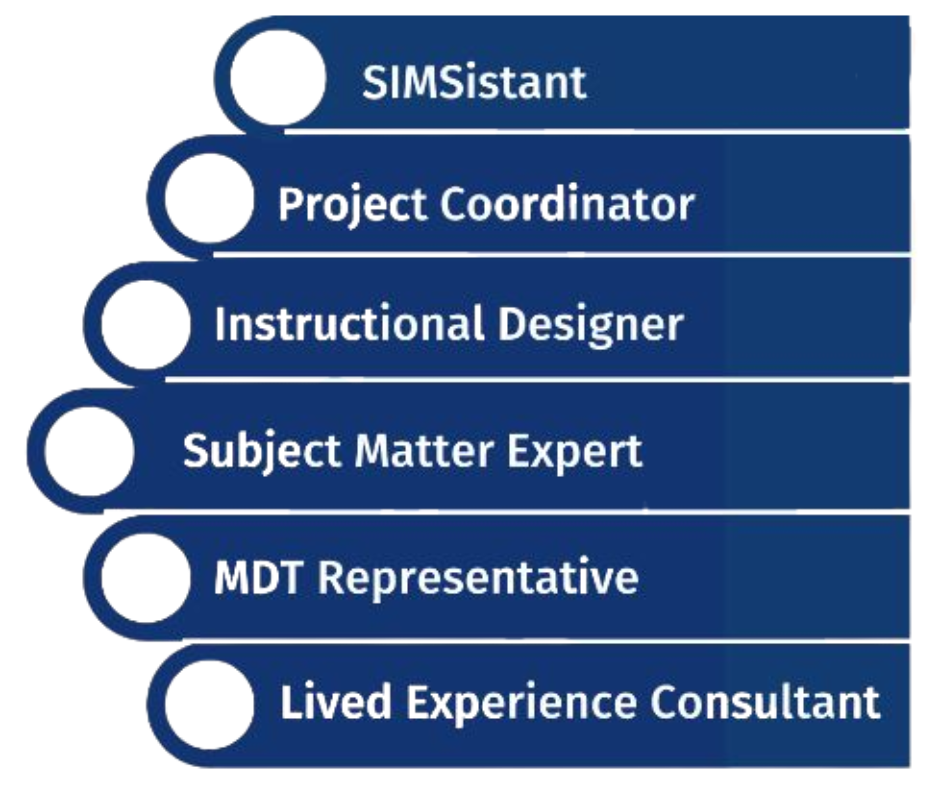
The SIM Studio provides ongoing multidisciplinary professional consultation, review, piloting and feedback for the Author Team as they work through the process of creating and writing the new simulation. Each Author Team is assigned a designated SIMSistant (a representative from the SIM Studio Team) and a Project Coordinator. These two roles will serve as a bridge to the larger SIM Studio team.
Evaluation
Evaluation and dissemination are critical aspects of all Project ASSIST activities. All simulations that are developed during the project will become part of our growing library of trauma-informed resources. Facilitators will use a battery of evaluation instruments to assess the impact of FORECAST simulations. We will use the results to help refine and improve the simulations.
Simulation Studio Faculty

Jerry Dunn
Executive Director of St. Louis Children’s Advocacy Center (STL CAC); Project ASSIST Primary Investigator; Clinical Professor Child Advocacy Studies
Jerry Dunn, Ph.D. is a Clinical Professor in the Department of Psychological Sciences at the University of Missouri-St. Louis. She also serves as the Executive Director of the St. Louis Children’s Advocacy Center, which is unique in that it is an accredited Child Advocacy Center serving a metropolitan area embedded within an academic unit of a university. Dr. Dunn also leads the Child Advocacy Studies (CAST) program which offers a certificate and bachelors degree in Applied Psychology of Child Advocacy Studies which prepares students to move into the child-serving workforce. During her career, Dr. Dunn has provided assessment and treatment for youth, adults, and families, clinical supervision, curricular development and training in trauma informed models and practices. On Project ASSIST, Dr. Dunn serves as the Project Director and works with the Simulation Studio and FORECAST Learning Communities teams and co-leads the Simulation Facilitator Community of Practice.

Dana Klar
Associate Teaching Professor Child Advocacy Studies; Clinician and Forensic Interviewer
Dana Klar is an Associate Teaching Professor at UMSL, and a licensed Clinician and Forensic Interviewer who serves on the training staff of St. Louis Children’s Advocacy Center. For over 30 years, Dana has worked in Child Advocacy or Academia; and was excited to merge the two by joining the UMSL Applied Psychology of Child Advocacy Studies (AP-CAST) faculty in 2017. A few academic and Child Advocacy highlights: Dana served as the Founding Director (and then later Interim, and Director once again), of the Buder Center for American Indian Studies at Washington University, totaling 9 years of service in this role. She also served 9 years at Lindenwood University, as faculty, field education coordinator and later Program Chair of the Social Work program. Her decade plus of more direct-service includes several years of service as a Guardian ad Litem (children’s attorney) with St. Louis County Family Court, and as a staff attorney for Court Appointed Special Advocates (now Voices for Children); as well as several years as a child & youth therapist.

Cecilie Kreiner
Grants Project Manager, CAST Consortium
Cecilie Kreiner is a logistical and project coordinator for the Project ASSIST Simulation Studio, and the Grants Project Manager for the CAST Consortium. In her role for Project ASSIST, Cecilie assists in program development and logistical planning. Cecilie’s background includes training coordination, English as a Second Language teaching of adults, and translation work.

Alejandra Martinez
Project ASSIST Grant Project Manager, Trauma-Informed Trainer, STL CAC DEI Taskforce Founding Chair
Alejandra Martinez, MSW, LCSW, is the Program Director for the Missouri Academy for Child Trauma Studies (MoACTS) as well as Project Manager for Project ASSIST at the St. Louis Children’s Advocacy Center (STL CAC). Ms. Martinez is passionate about workforce development for child-serving trauma professionals. She is one of the curriculum developers for the ASSIST Mentorship Program for Underrepresented Professionals (AMP-UP) as well as a National Trainer of the FORECAST model. She trains extensively across a range of trauma-related topics and teaches at the undergraduate level at the University of Missouri-St. Louis within the School of Social Work and Psychological and Brain Sciences. Ms. Martinez received her Masters of Social Work from the Brown School at Washington University in St. Louis. As a bilingual Licensed Clinical Social Worker, she works with children and adolescents impacted by trauma, such as sexual abuse, physical abuse, domestic violence, migratory stress and traumatic grief. Over the course of her career, she has gained expertise in working with Latino immigrant communities.

Megan Marietta
Director of Programming
Megan Marietta, MSW, LCSW is the Director of Programming for the STL CAC, overseeing both clinical and forensic services. Megan is also a trainer for the agency and is a member of the DEI Taskforce. In addition to her specialization in childhood trauma and systemic responses, Megan has extensive experience in urban education, with a focus on trauma-informed practices and behavioral health in schools.